
Addressing Stormwater Management for the Benefit of Public Paths and Homeowners
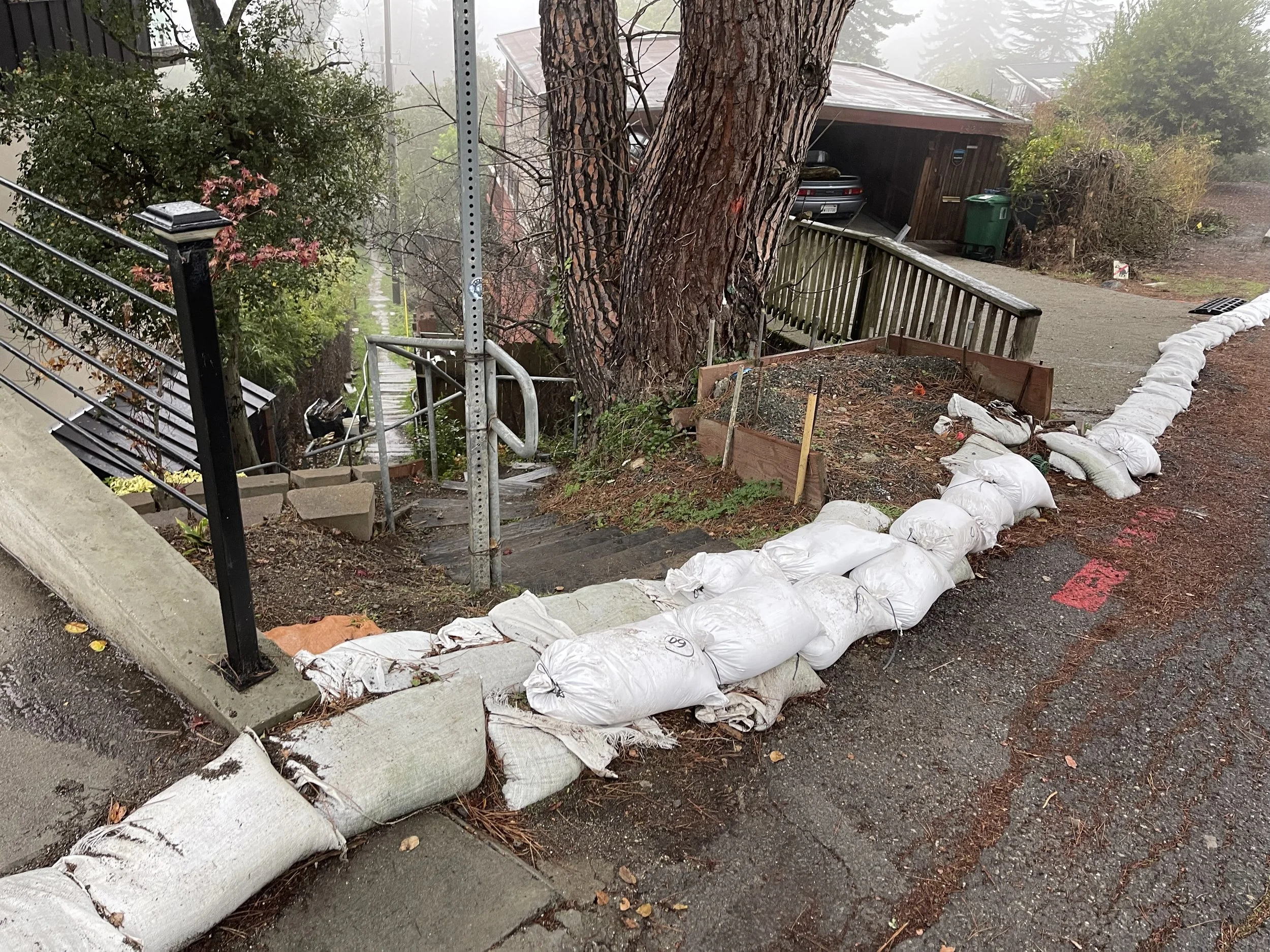
Bandaid solution: Sandbags in front of driveways and public path.
In the Berkeley Hills, many streets lack adequate curbs and gutters. Stormwater flows down streets and paths, flooding driveways, homes, and yards. Runoff carries pollutants, including oil, fertilizers, and debris from tires that contain synthetic rubber and microplastics.
Green stormwater features such as bioswales, rain gardens, and permeable pavement can slow and filter runoff. However, in steep hilly neighborhoods, curbs and gutters remain essential to direct water downhill and protect homes, streets, and public paths from erosion and structural damage.
Steve Brindle, a Berkeley Hills resident, shared the video to the right with Berkeley Path Wanderers Association. As you can see, the video shows water rushing down the street into lower Glendale Path, cascading down concrete stairs.
“It is as if the public path is a storm gutter,” said David Gyorke, Path Building Liaison for Berkeley Path Wanderers Association. He said flooding washes away soil beneath stair treads and around handrail footings, shortening a path’s lifespan. Addressing the root cause, he added, makes more economic sense than repeated repairs as climate change intensifies storms. This proactive approach is known as climate resilient infrastructure.
Berkeley Path Wanderers Association has installed diversion blocks and sandbags at the top of the path. This year, additional sandbags were added to build up the barrier. Gyorke said he has spoken with Terrence Salonga, supervising civil engineer in the city’s Public Works Department. “He has recognized the issue,” Gyorke said, adding that he hopes for a resolution that will protect homeowners and path infrastructure.
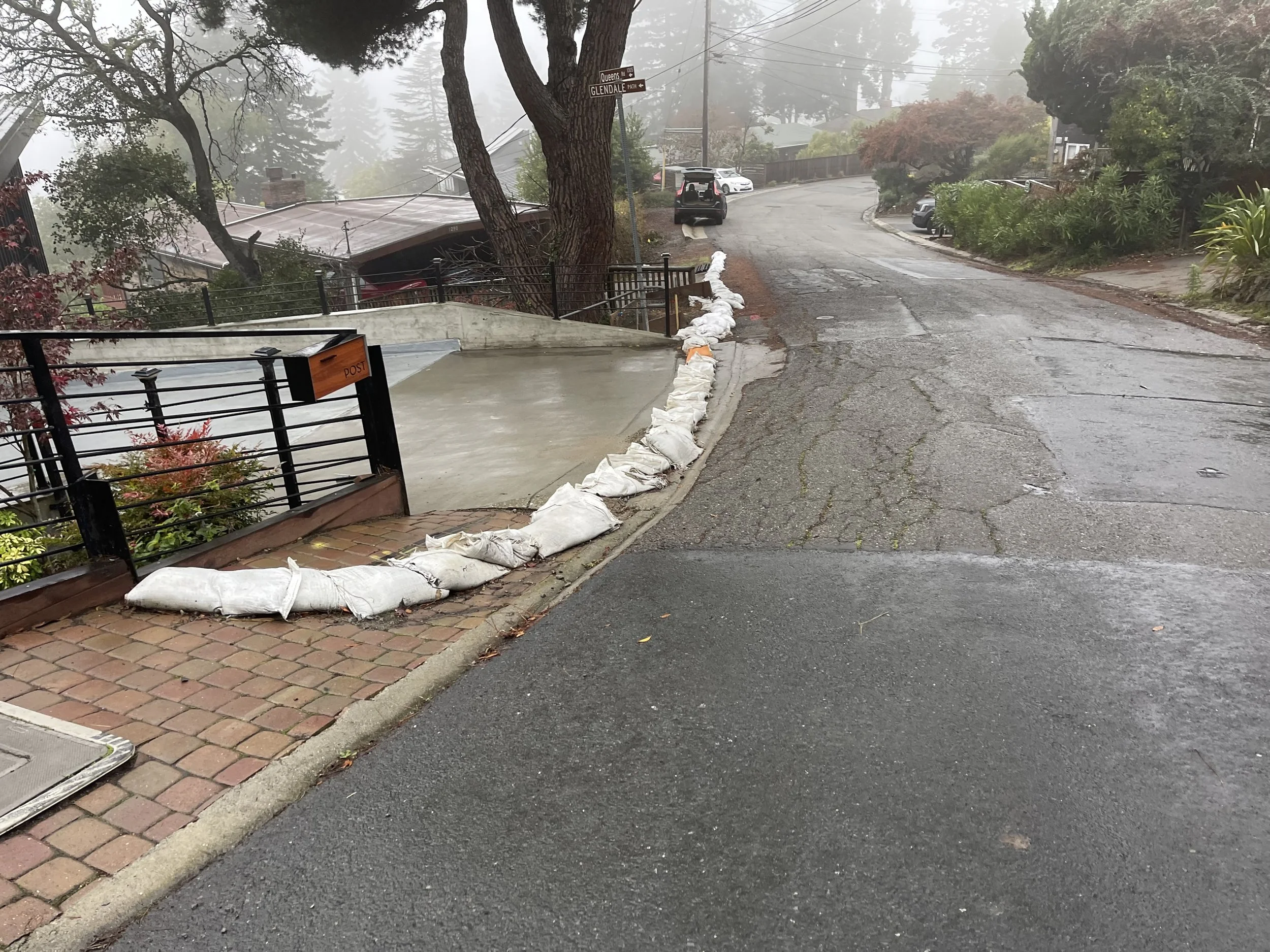
Heavy sandbags are placed every time storms are expected, blocking access.
Brindle, whose home is next to Glendale Path, also places sandbags during heavy rains, though they block his driveway and do not fully prevent flooding. Inadequate curbs and hillside soil blocking drainage are diverting water into his area and the path. “Not only do we have to deal with water on our side of the street, we are getting significant flow from the other side,” he said.
He reported the issue to the city four months ago. After an initial response, he said there has been no further correspondence or progress. He is trying to determine whether he can improve the curb himself or if it is considered in the public right of way requiring a permit,
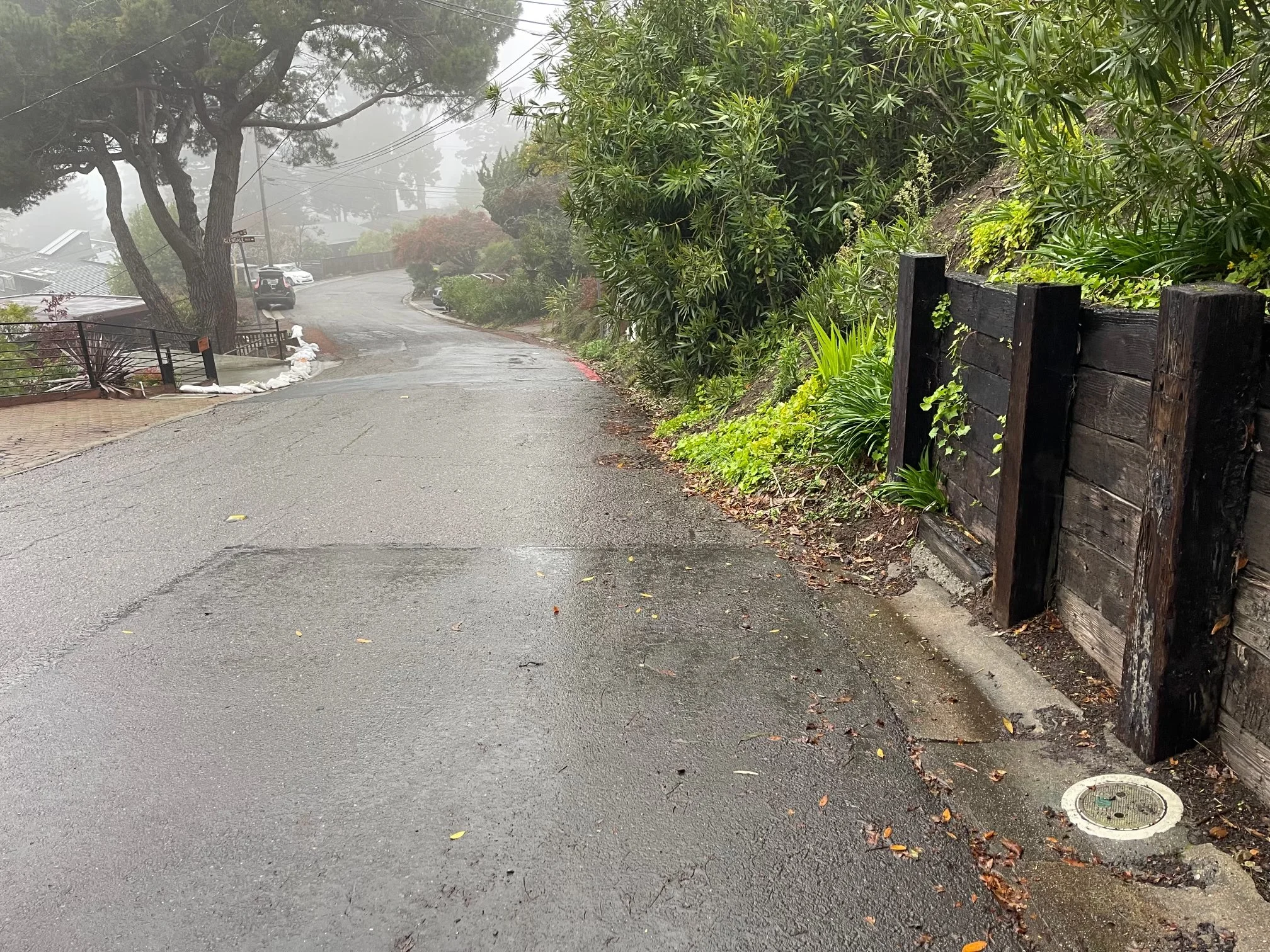
Adjacent hillside property sliding into the street and blocking runoff.
Investing in stormwater infrastructure can reduce long-term repair costs. According to Berkeley’s Stormwater Master Plan website, the city is developing a comprehensive plan and provides a link to report a drainage issue. Immediate flooding and clogged drains can be reported to 311 or (510) 981-6620.
In the meantime, Berkeley Path Wanderers Association continues to address flooding on paths with sandbags, drainage pipes, and diversion blocks. For major upgrades, the city maintains concrete paths, while Berkeley Path Wanderers Association maintains wood tread pathways. Many paths need new wooden treads and updates.
“We have identified 14 paths that need upgrades,” Gyorke said. “We just need more volunteers to assist.”
If you would like to get sunshine and exercise and work with your hands, we could use your help. Those interested in volunteering can contact: pathbuilding@berkeleypaths.org.